THE PROCESS OF WET FELTING
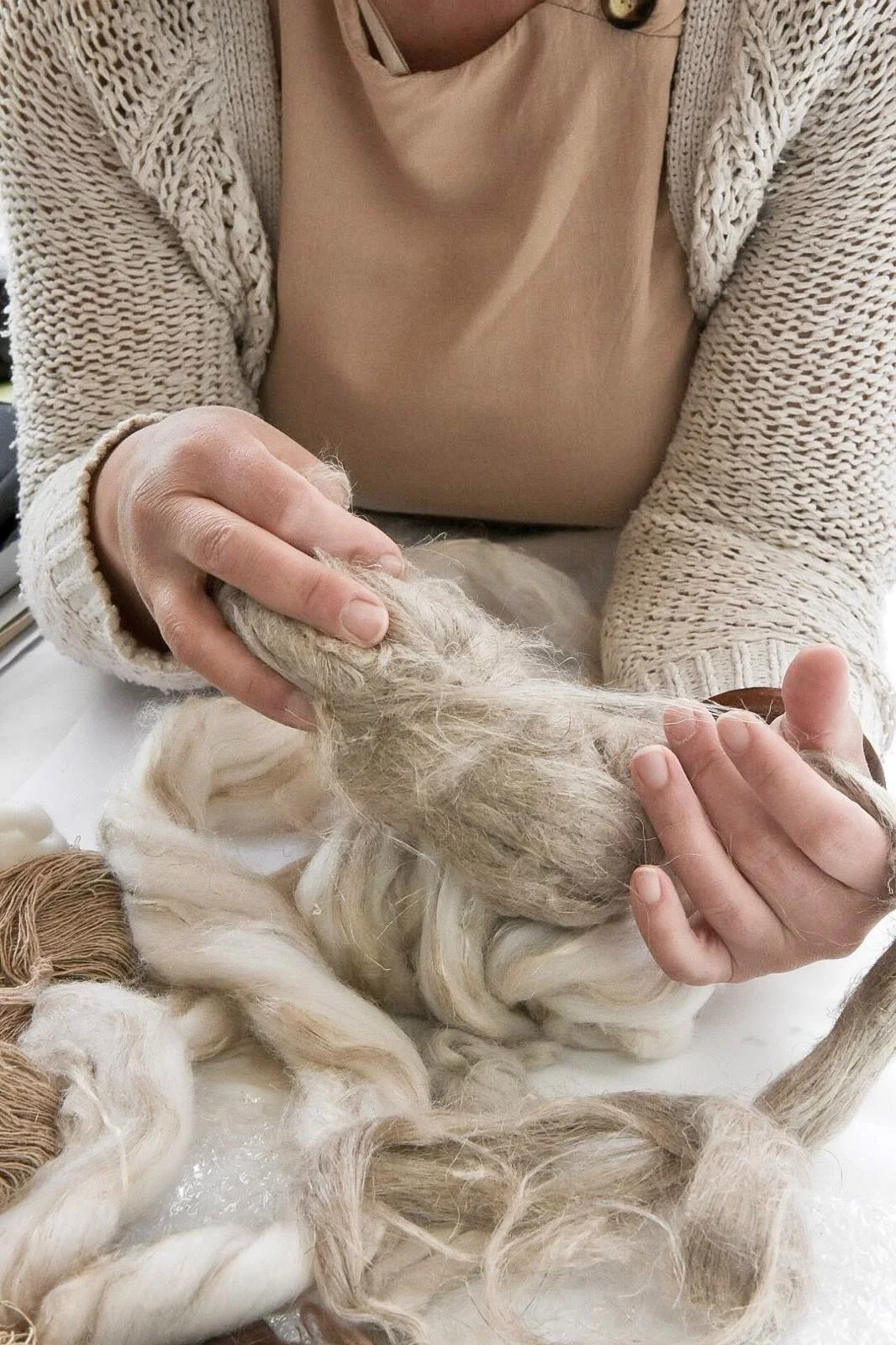
Photo credit: Marta Wasielewska
WHAT IS WET FELTING?
Wet felting is one of several methods which can produce felt from the non-spun wool. It’s a truly amazing mindful process where the outcome always exceeds your expectation.
In fact, it is one of the first handicrafts known to humans and the ancient way of making fabric!
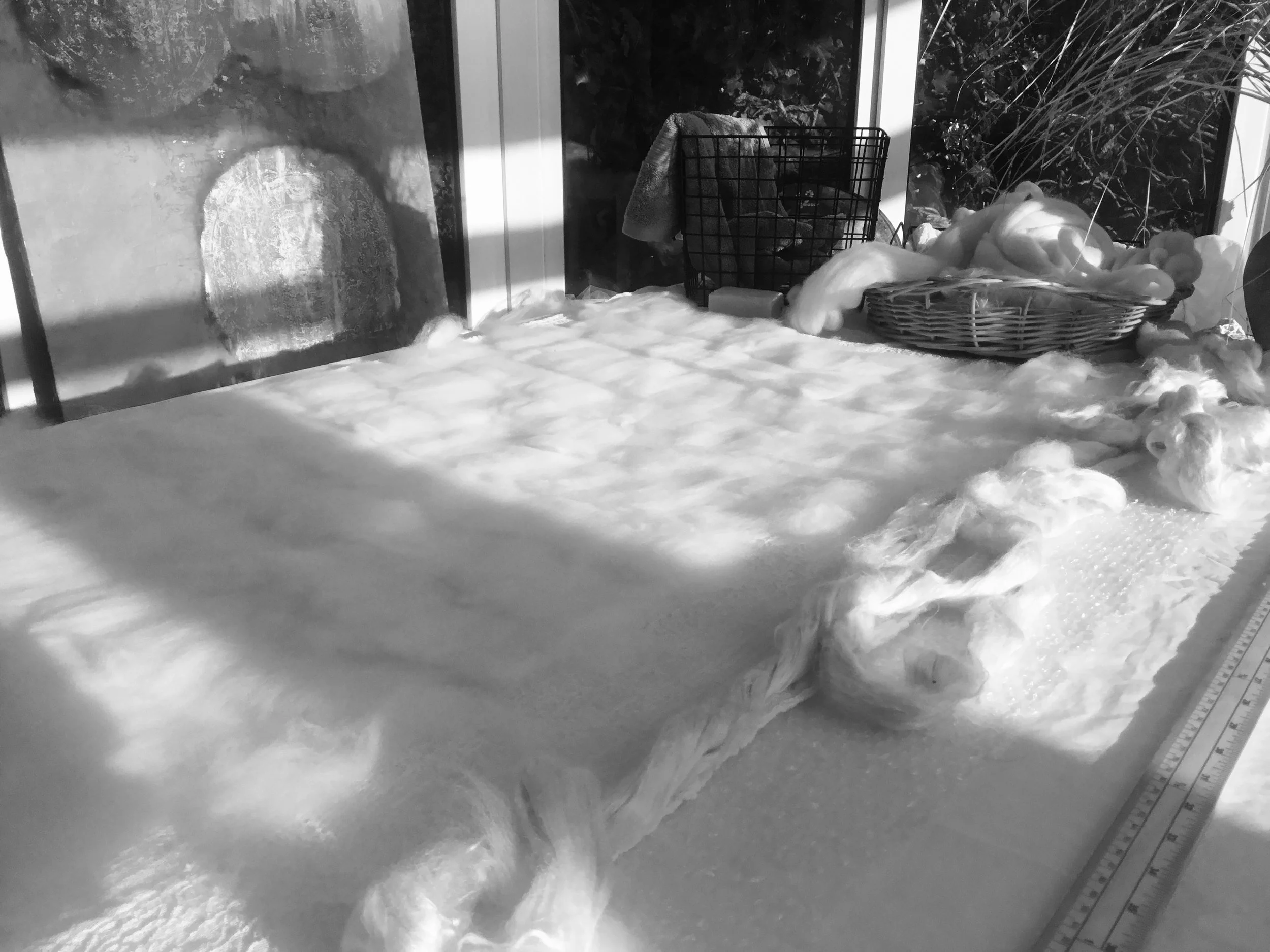
The process of wet felting starts with laying out the wool and fibres across a surface that’s clearly always larger than I need.
I lay the wool strands with my hands, bit by bit teasing the wool until the picture is complete. It reminds me of an evolving painting, where the natural colours and textures tell the story. It can take hours and days but like good books and fine wine, these things cannot be rushed. Each piece needs space and time to find its simple intentional form.
I find that the tactile process of playing with natural fibres, laying, blending, sorting and appreciating their original beauty works miracles for me.
I love this mindful and organic experience that wool and natural dyes provide, and embrace the journeys they take.
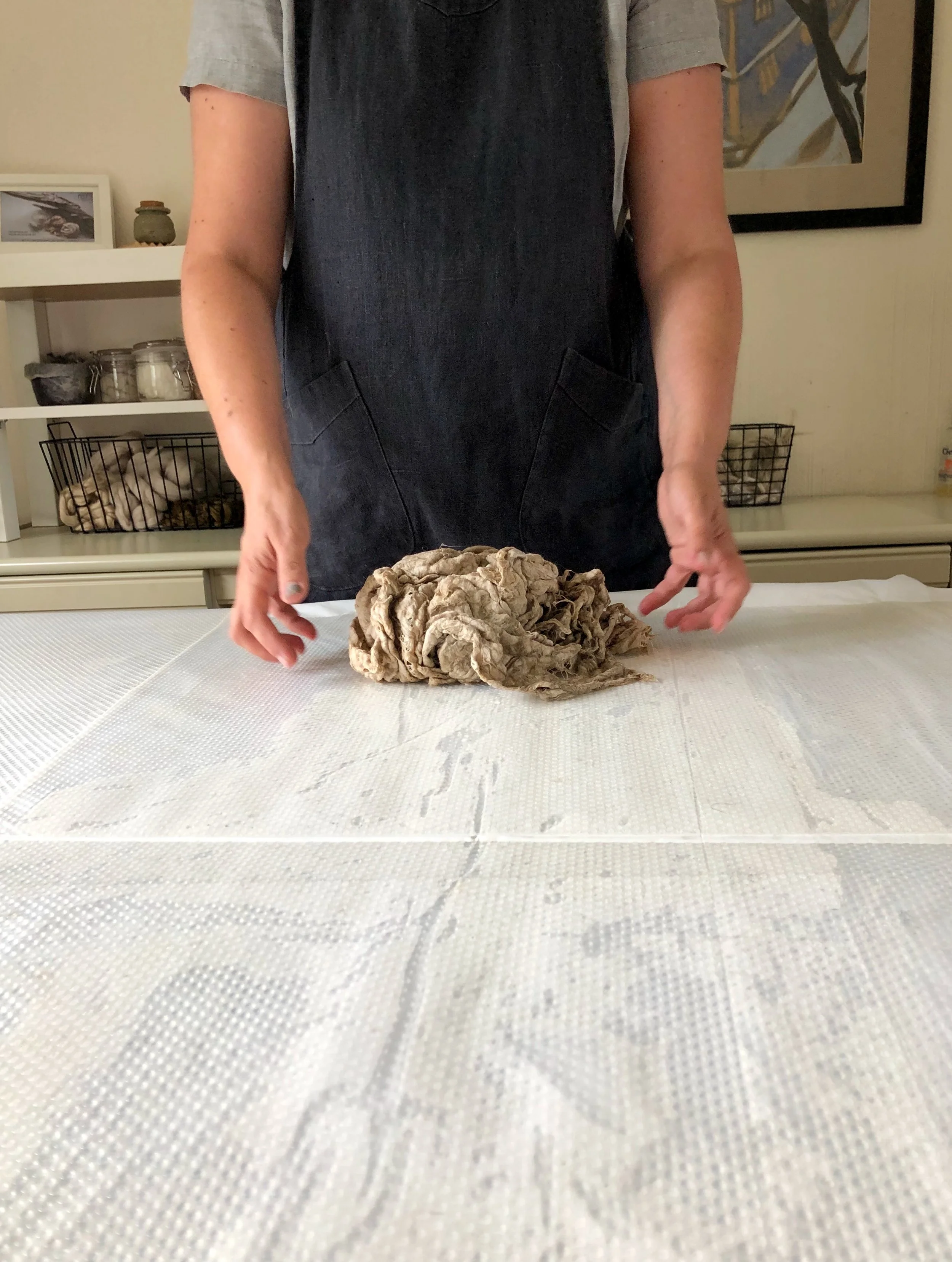
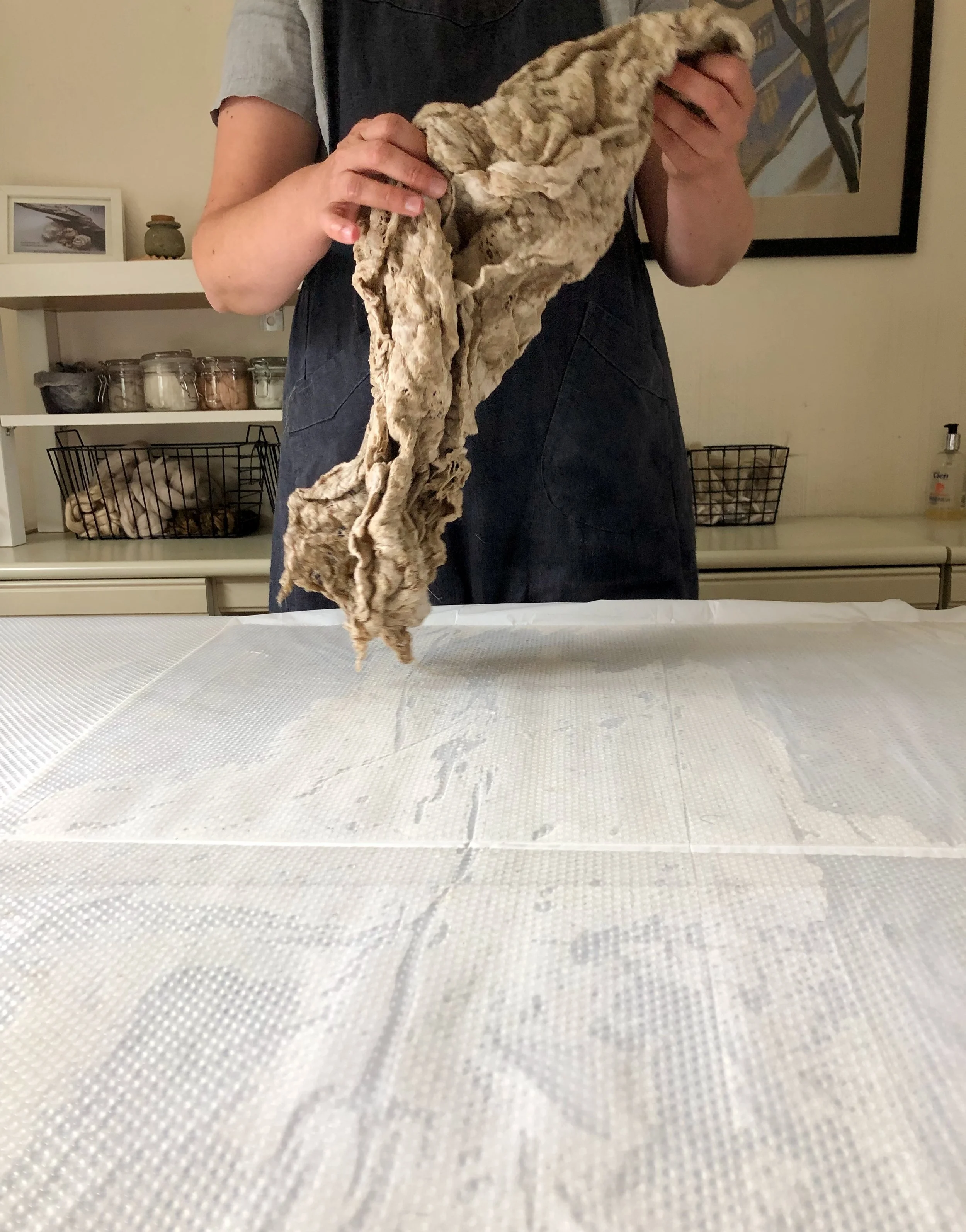
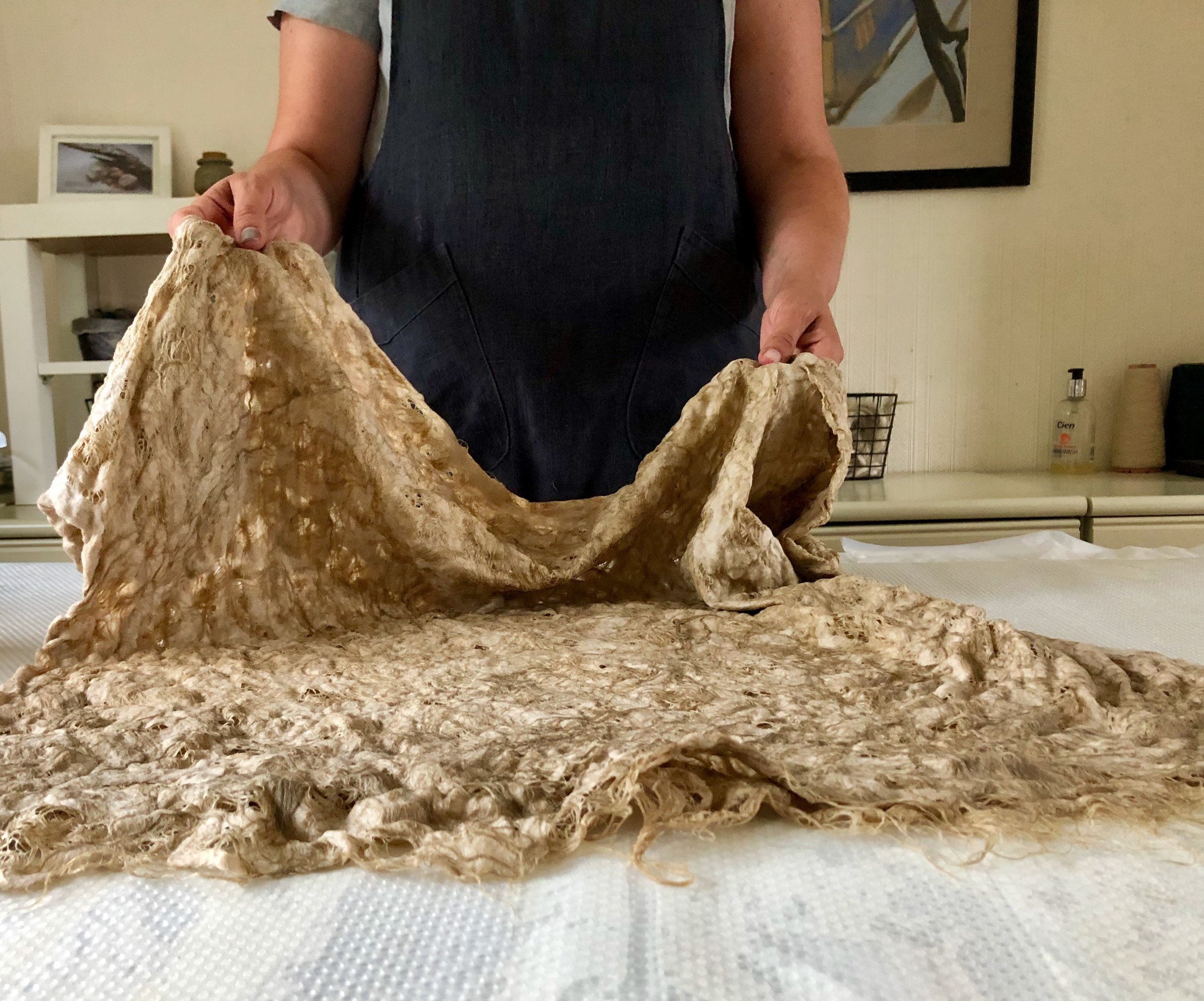
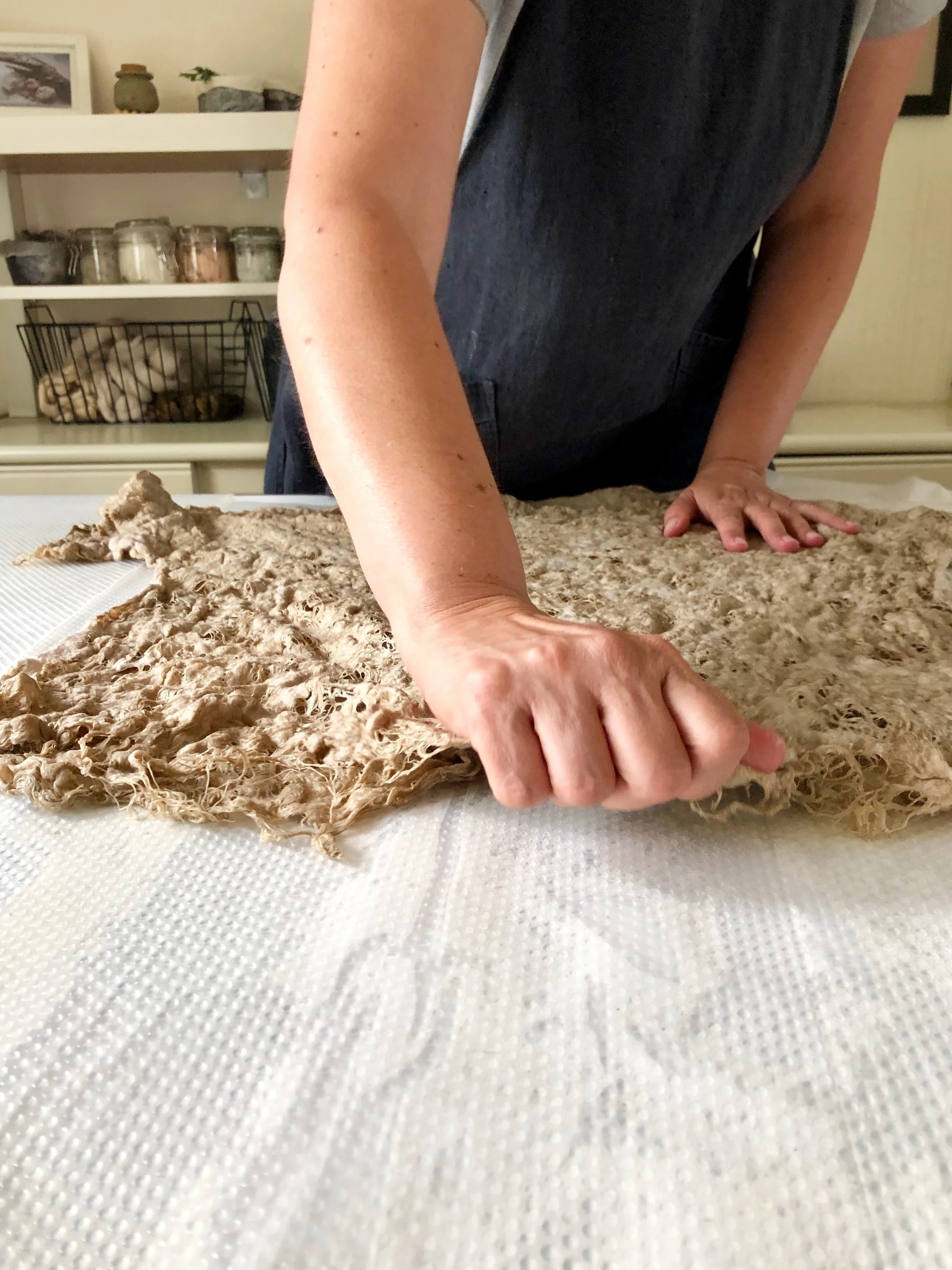
WHAT ARE THE STAGES OF WET FELTING?
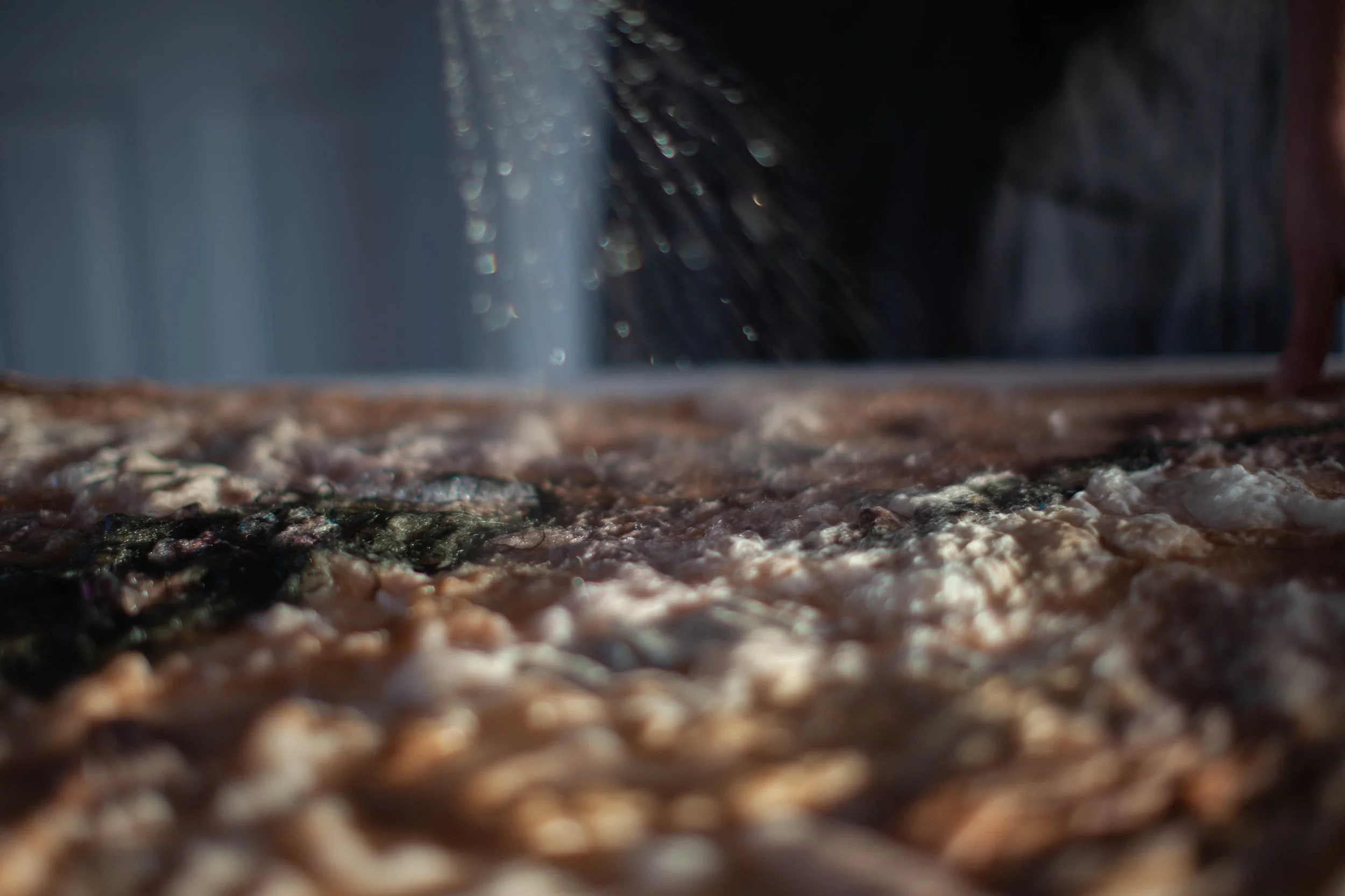
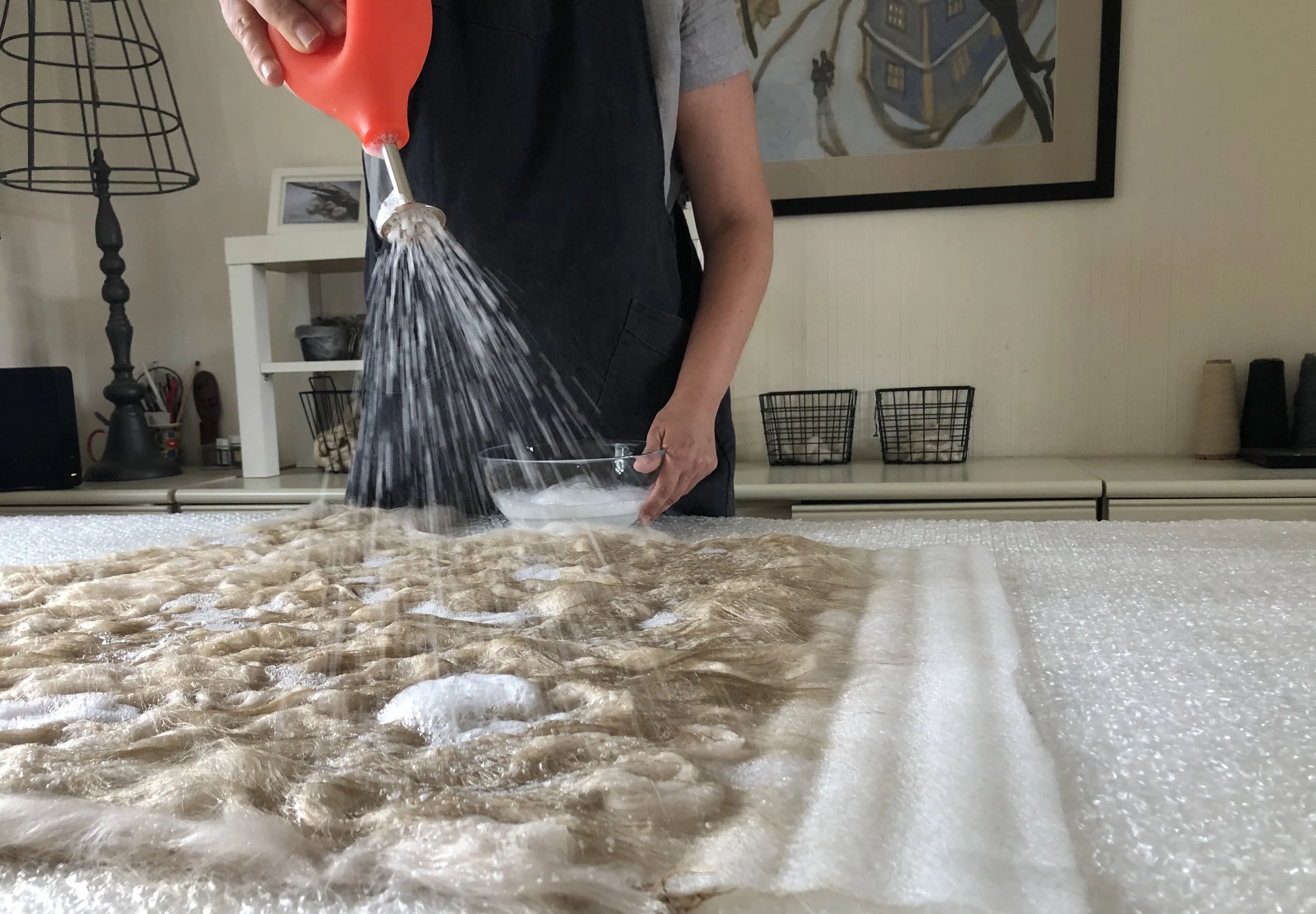
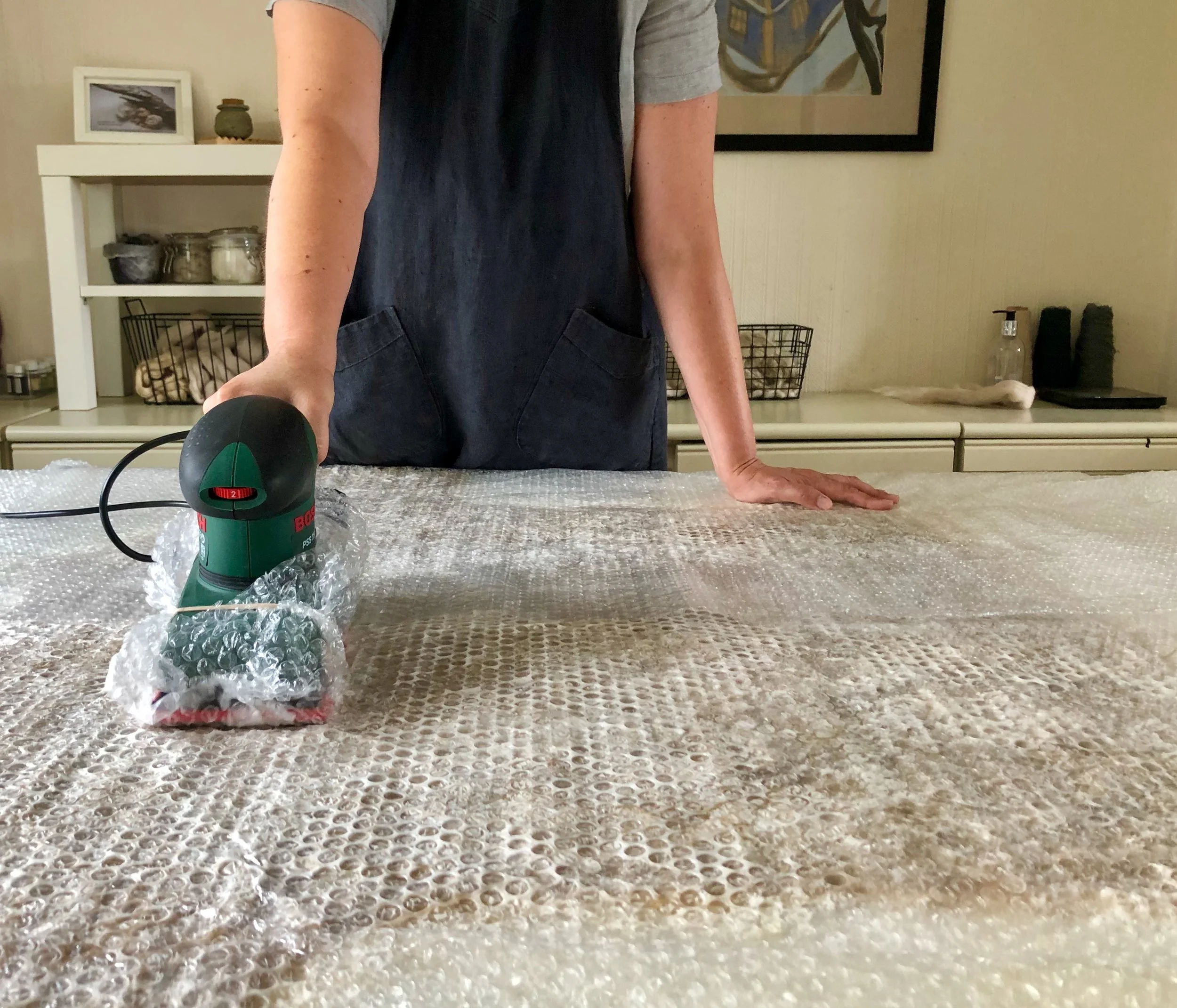
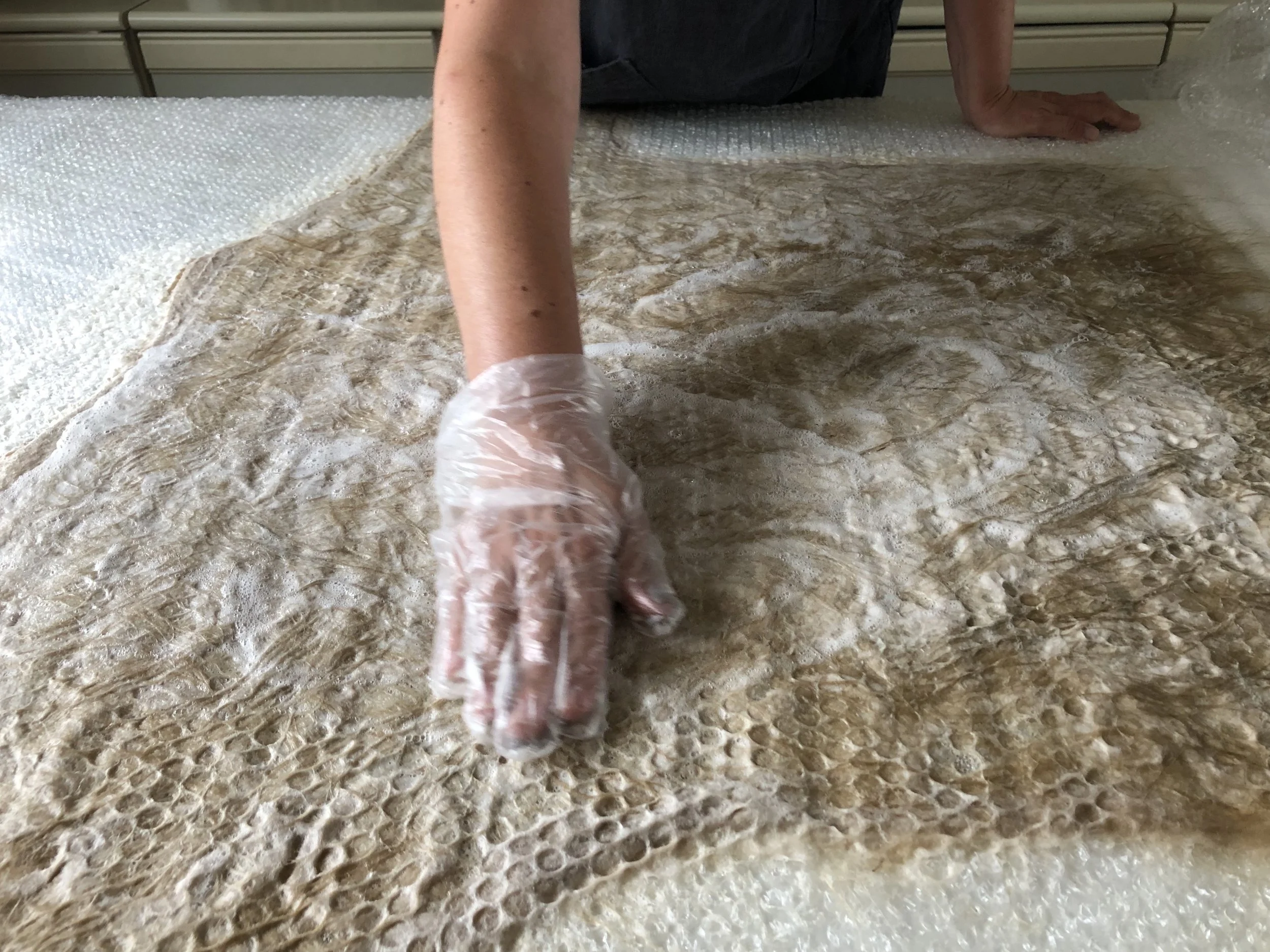
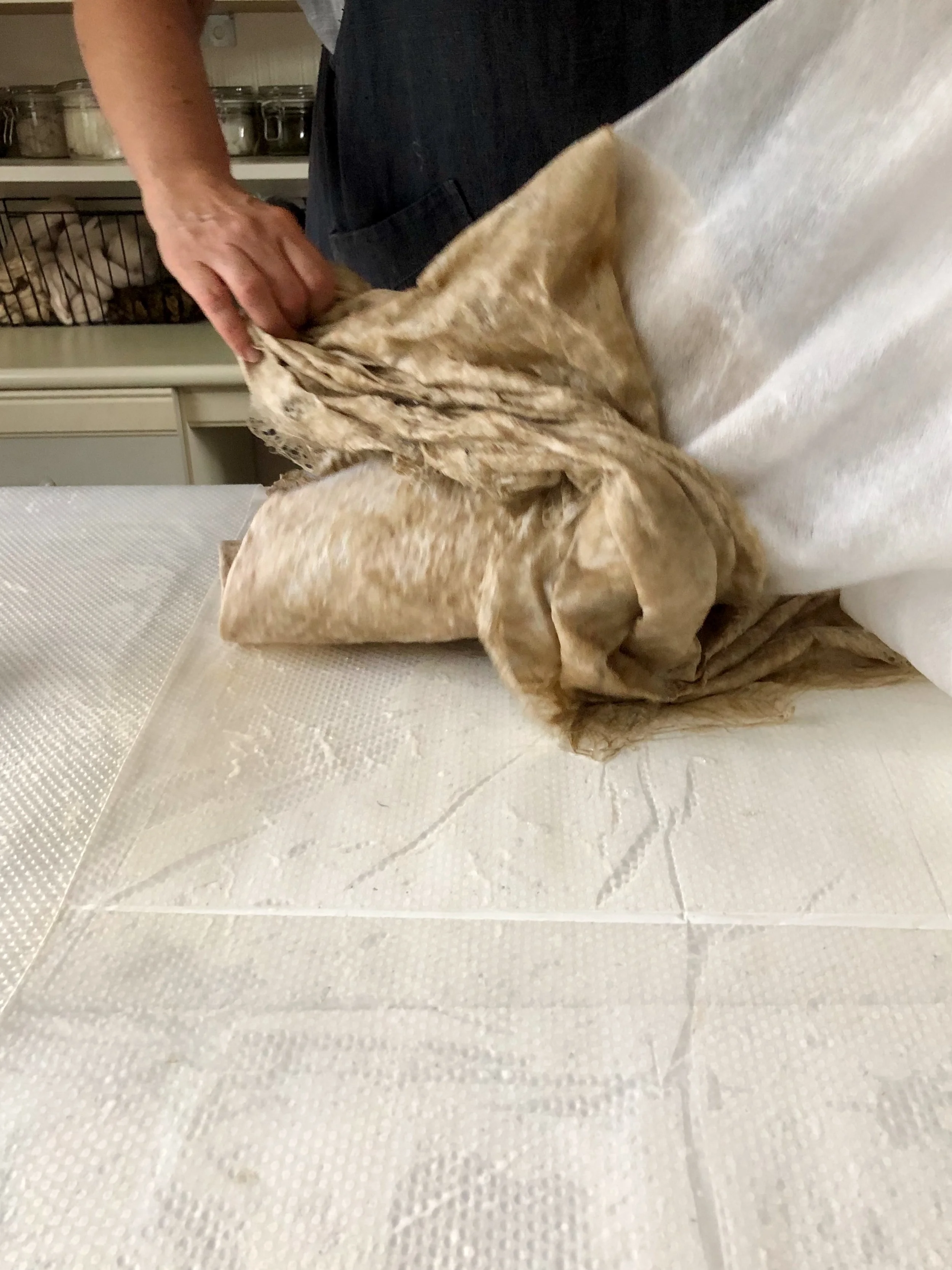
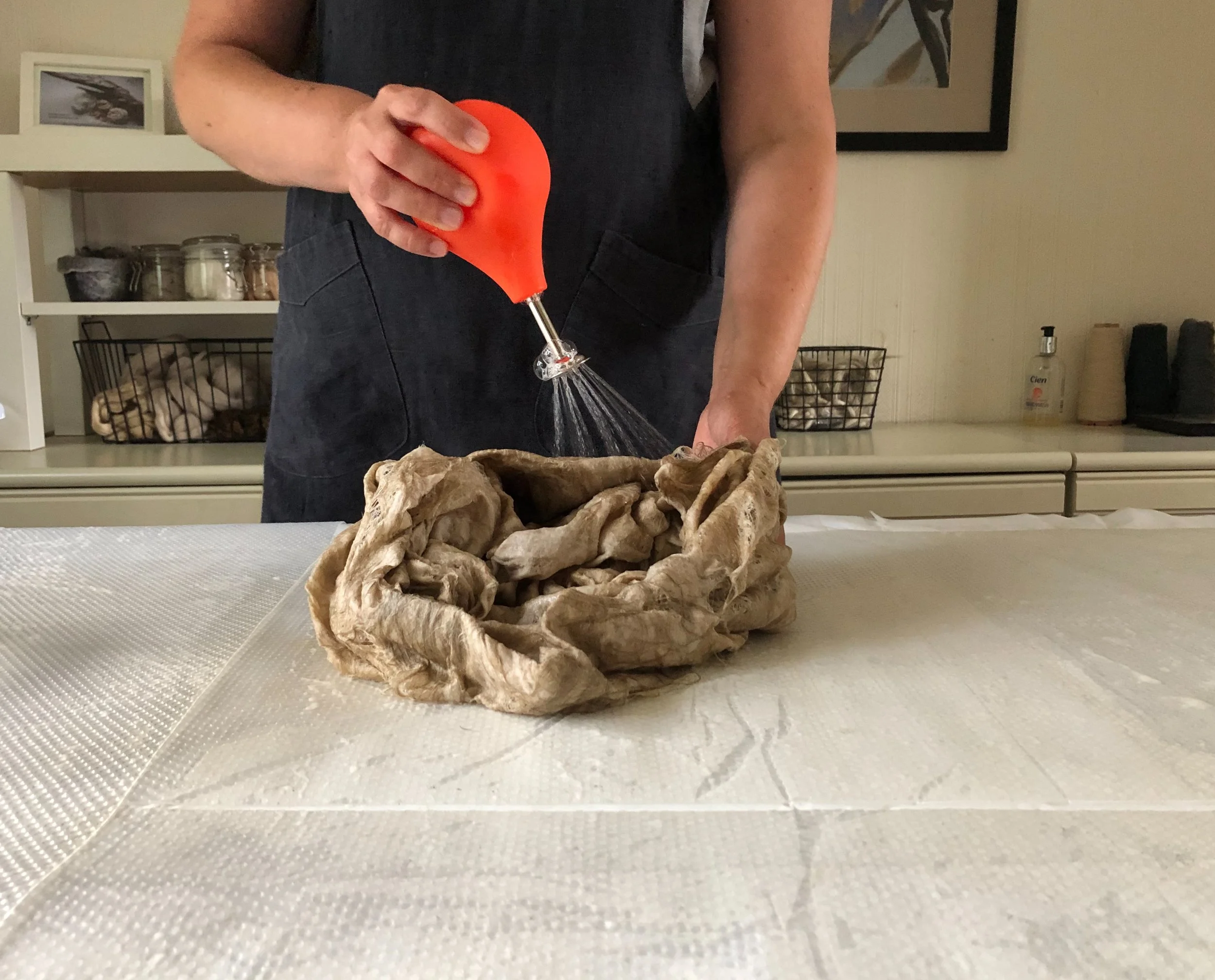
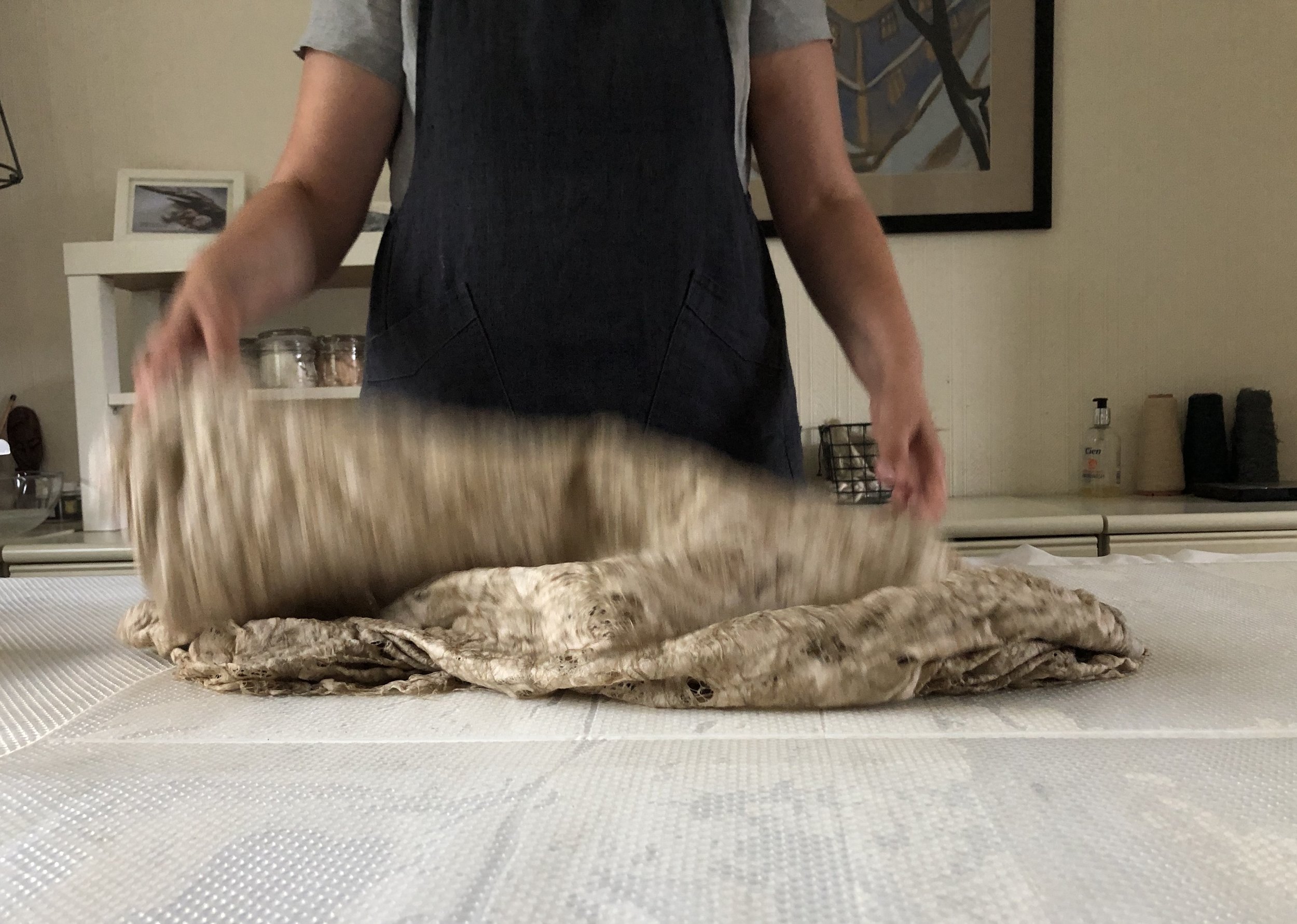
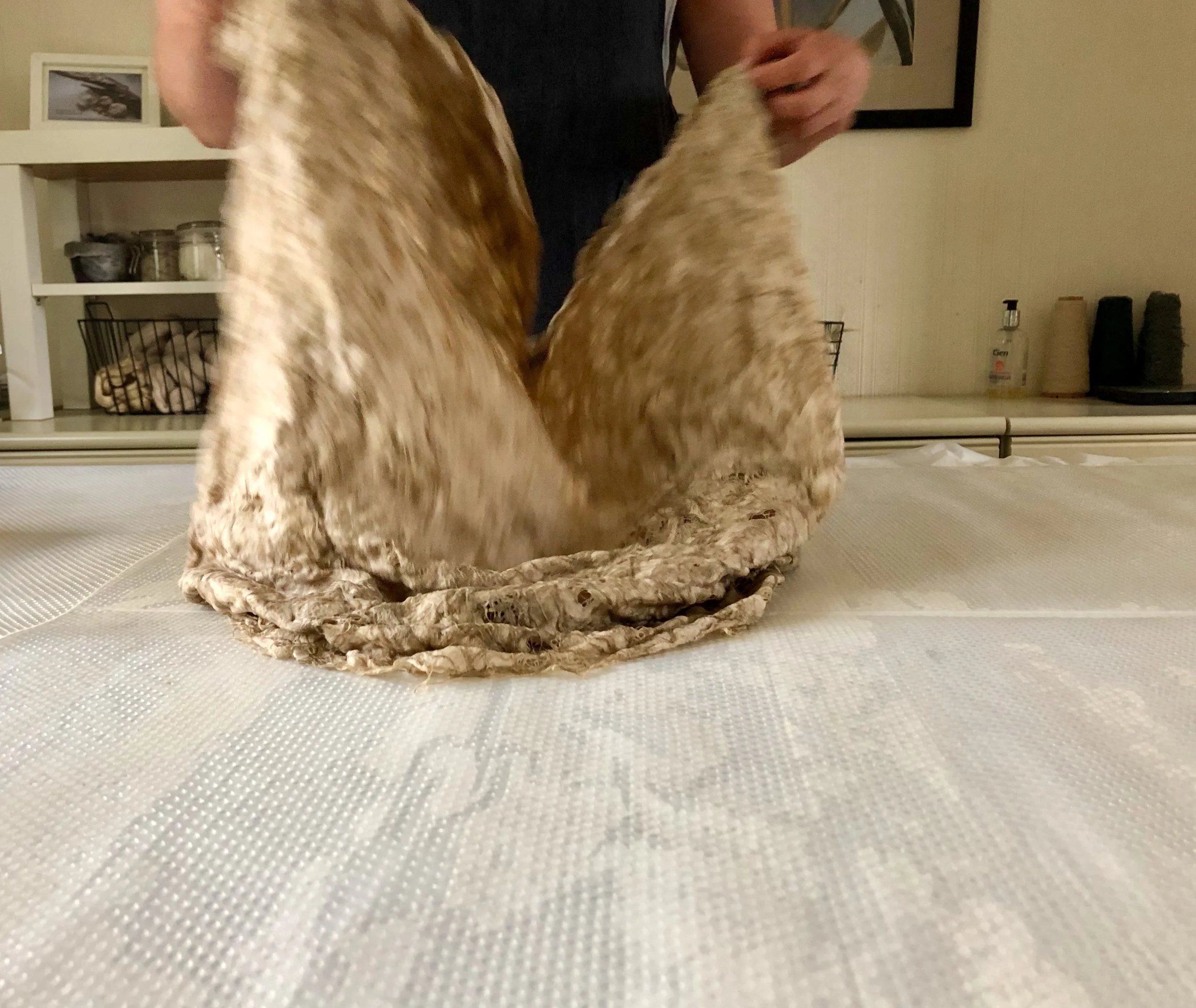
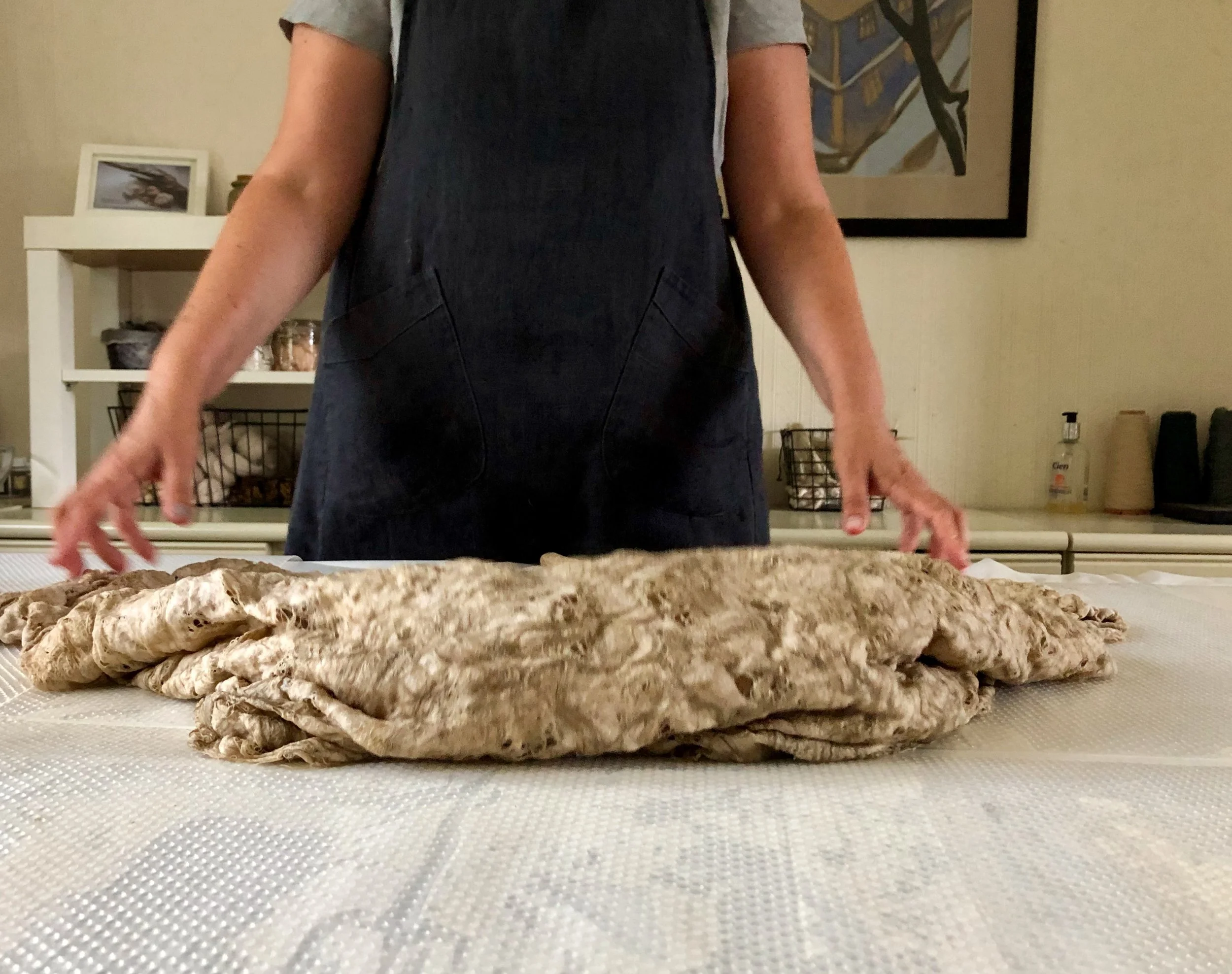
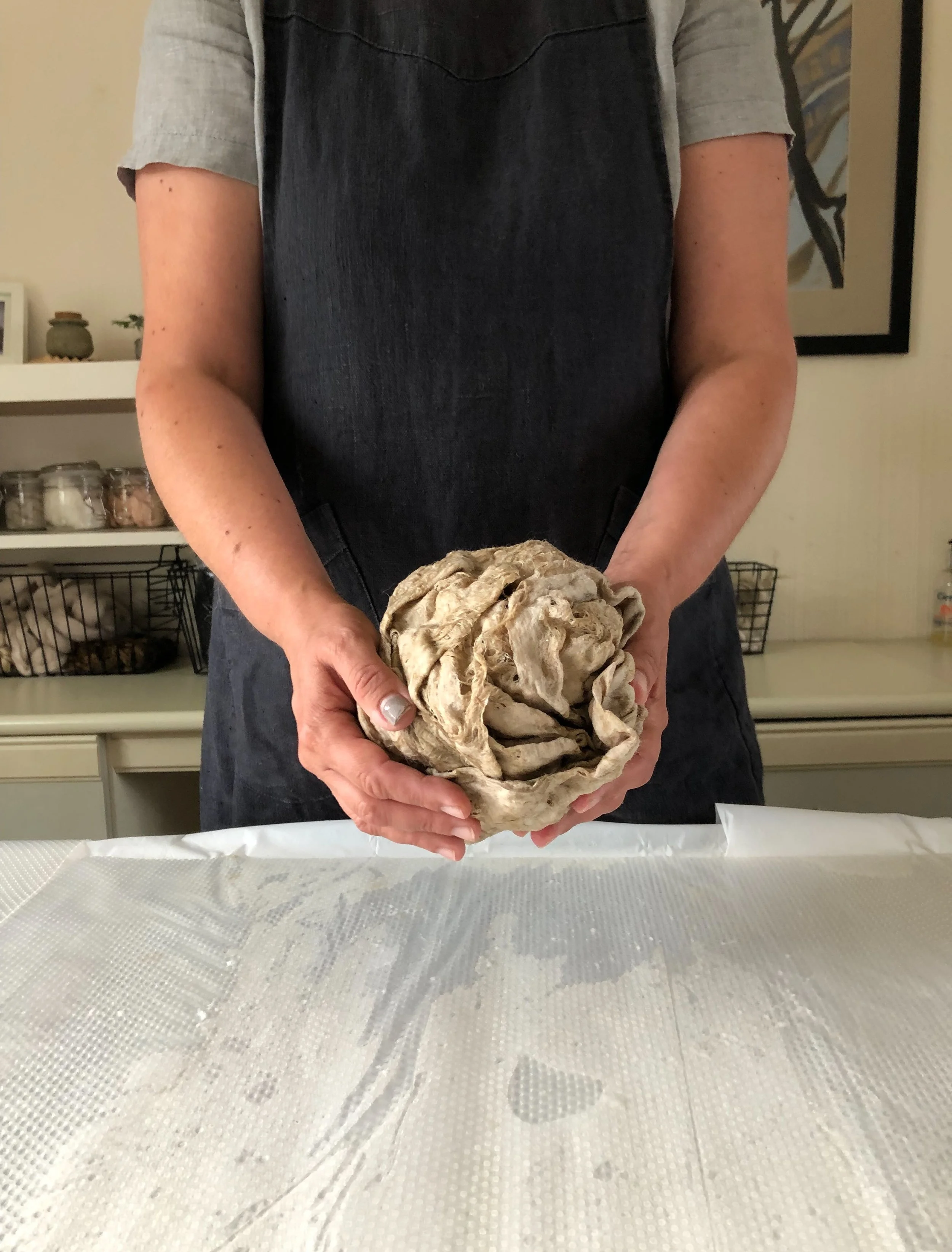
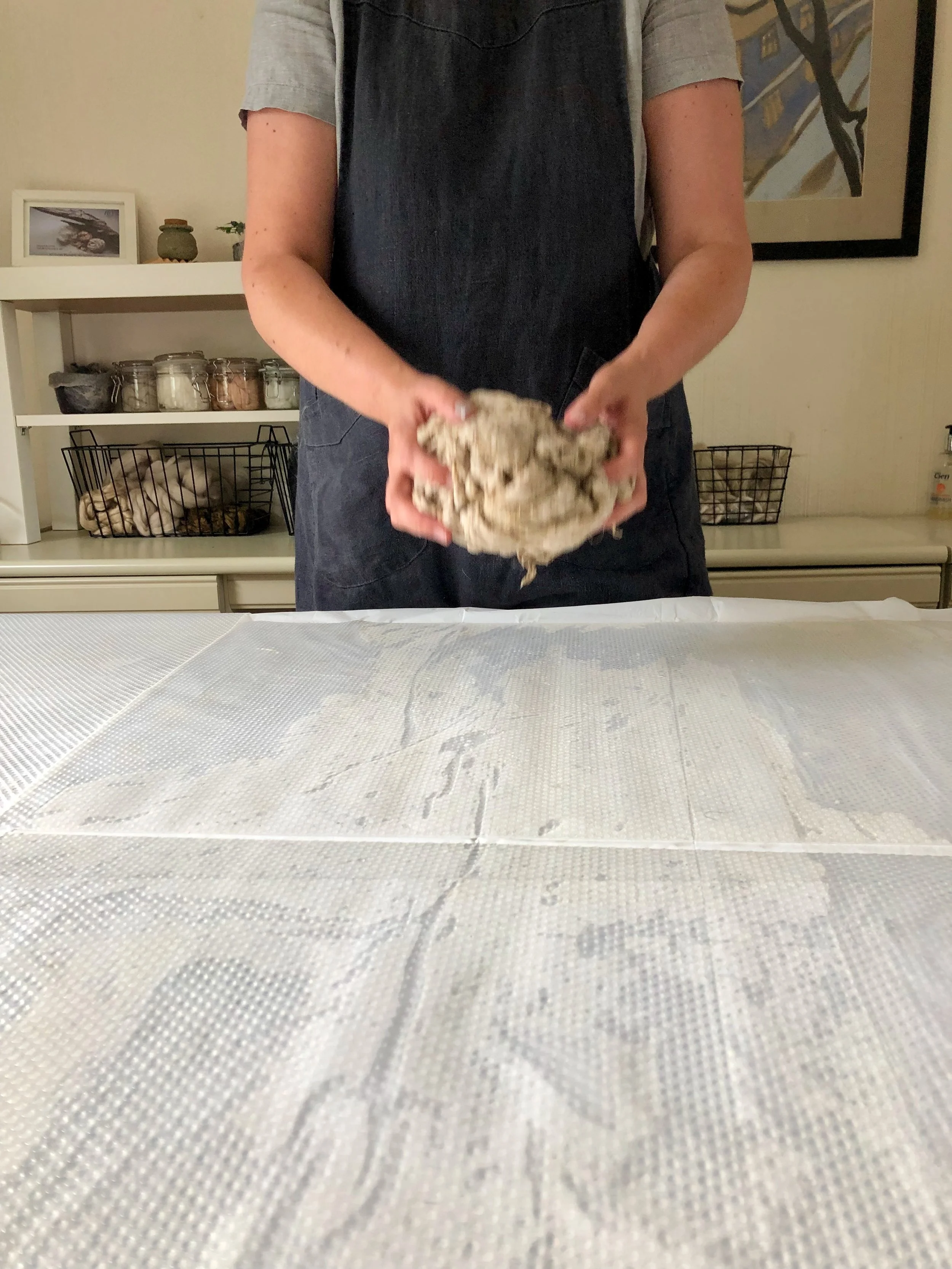
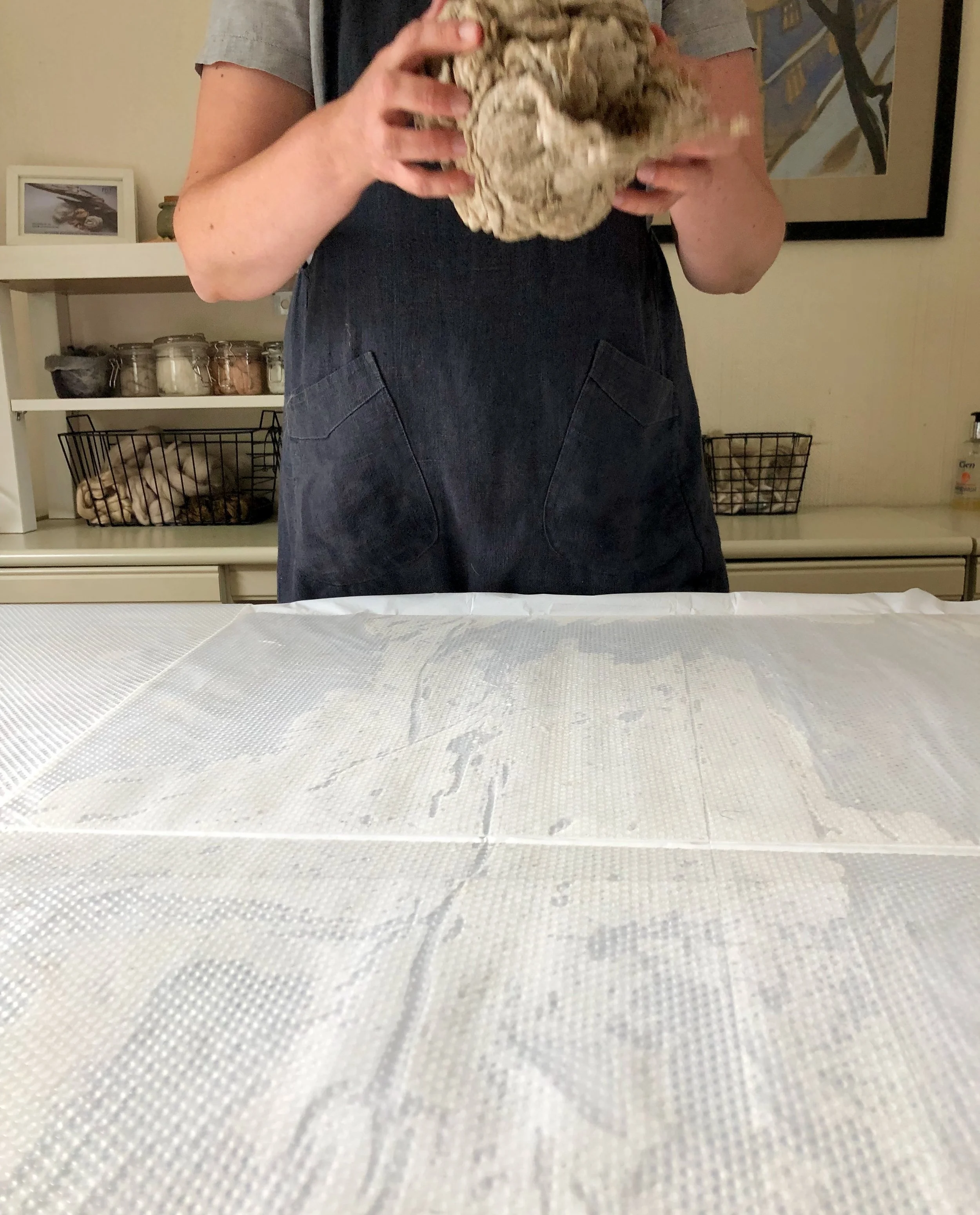
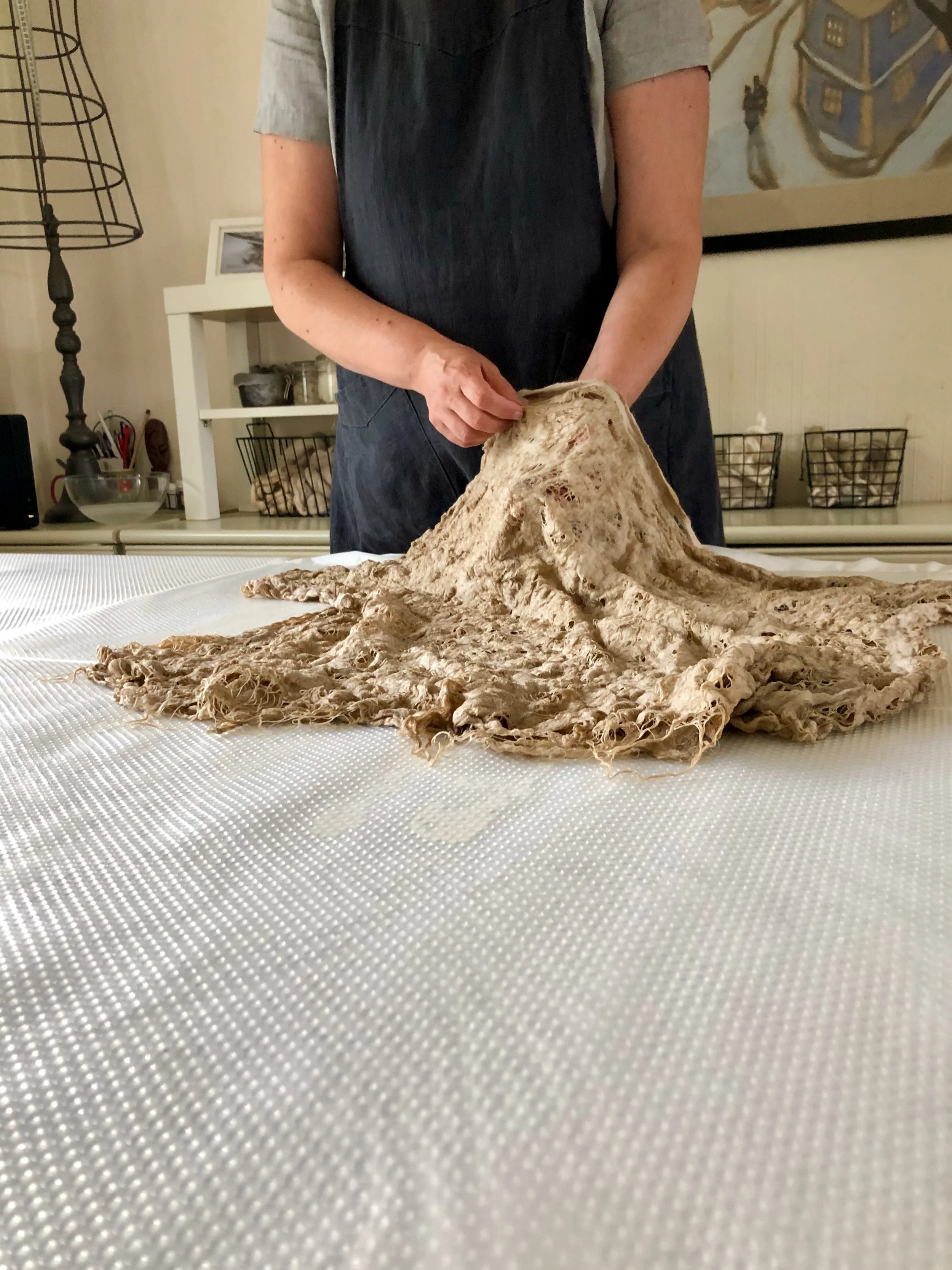
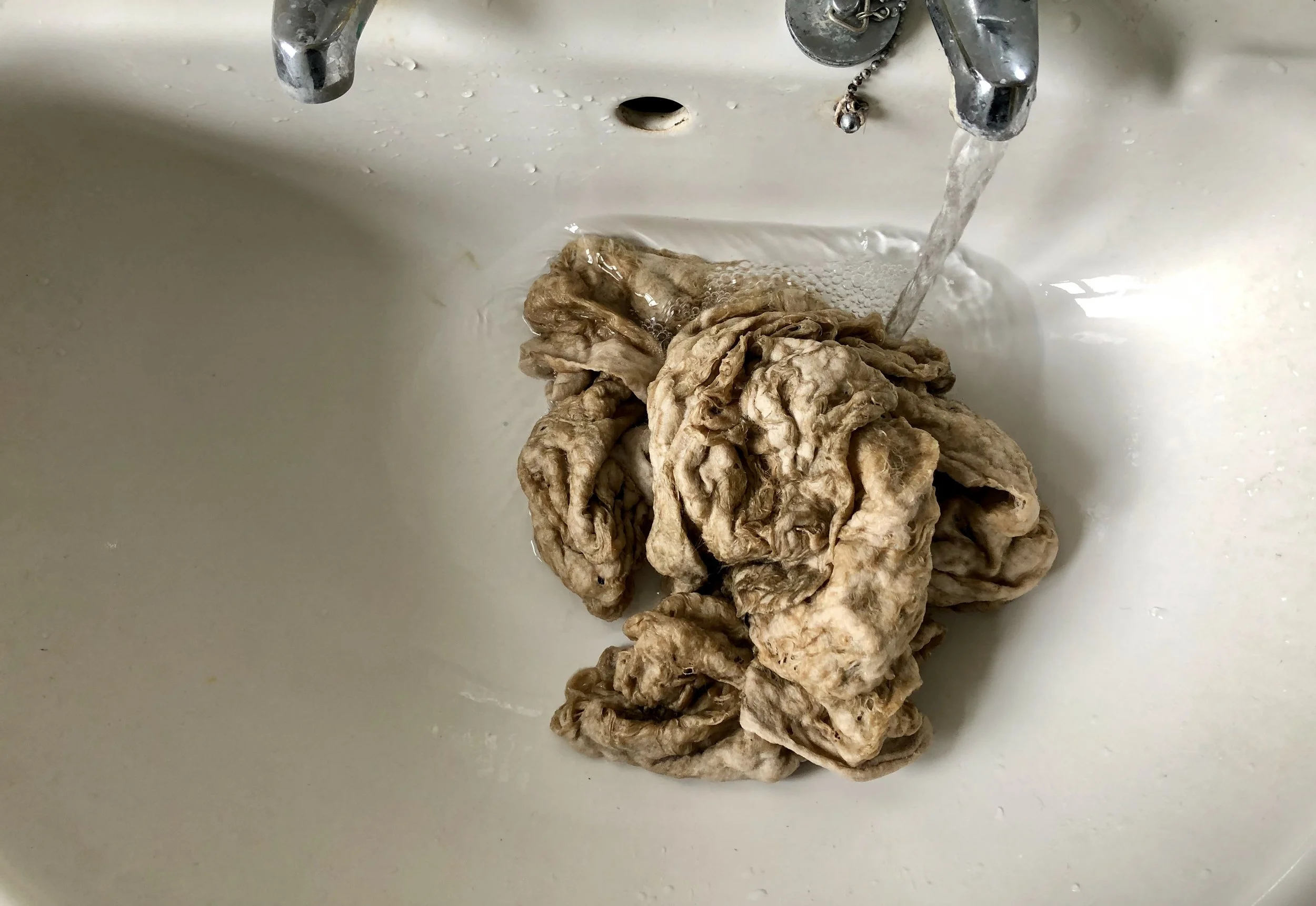
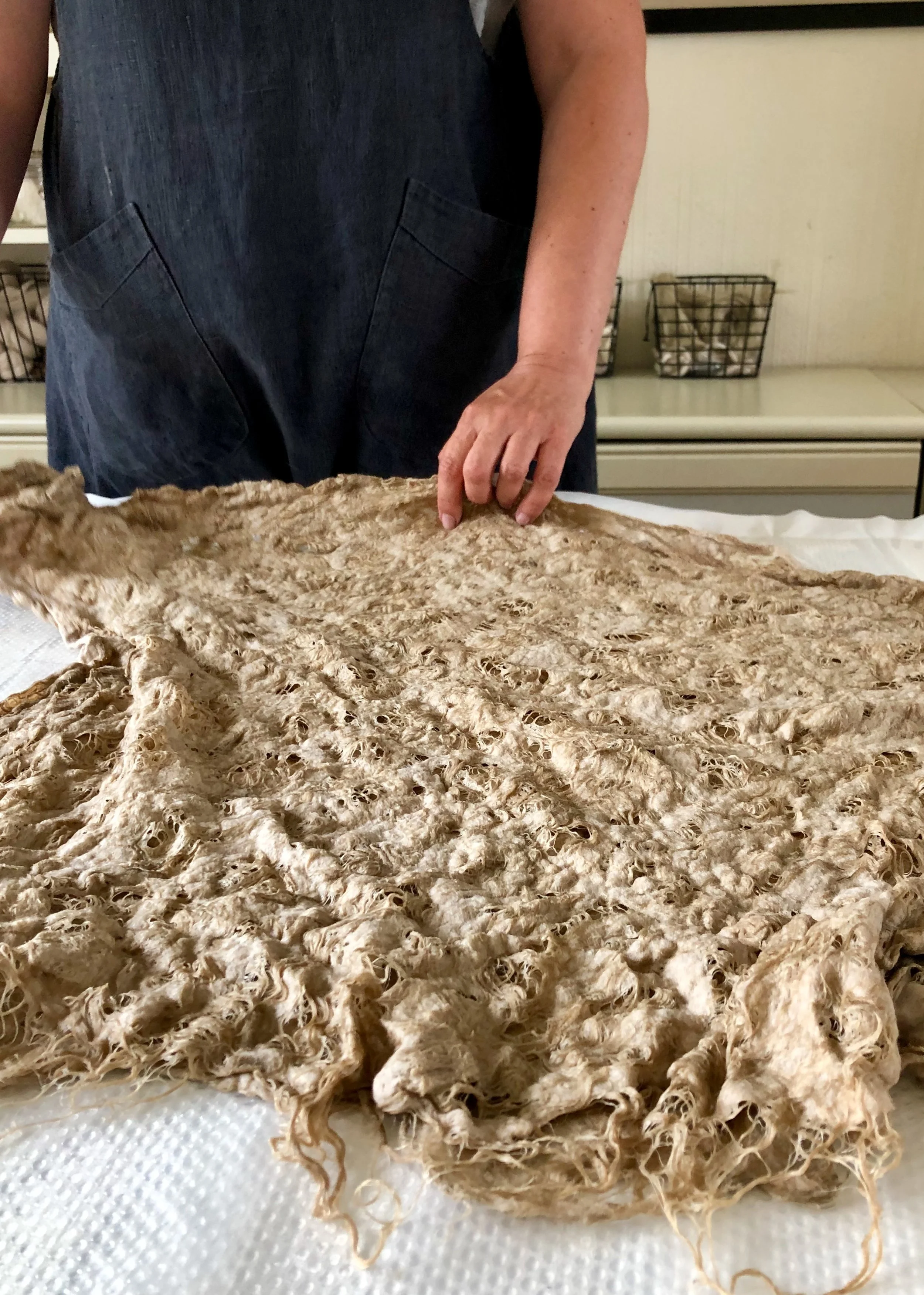
The warm soapy water is sprinkled to the layers of finest merino wool or other kinds of wool that are placed at angles to one another.
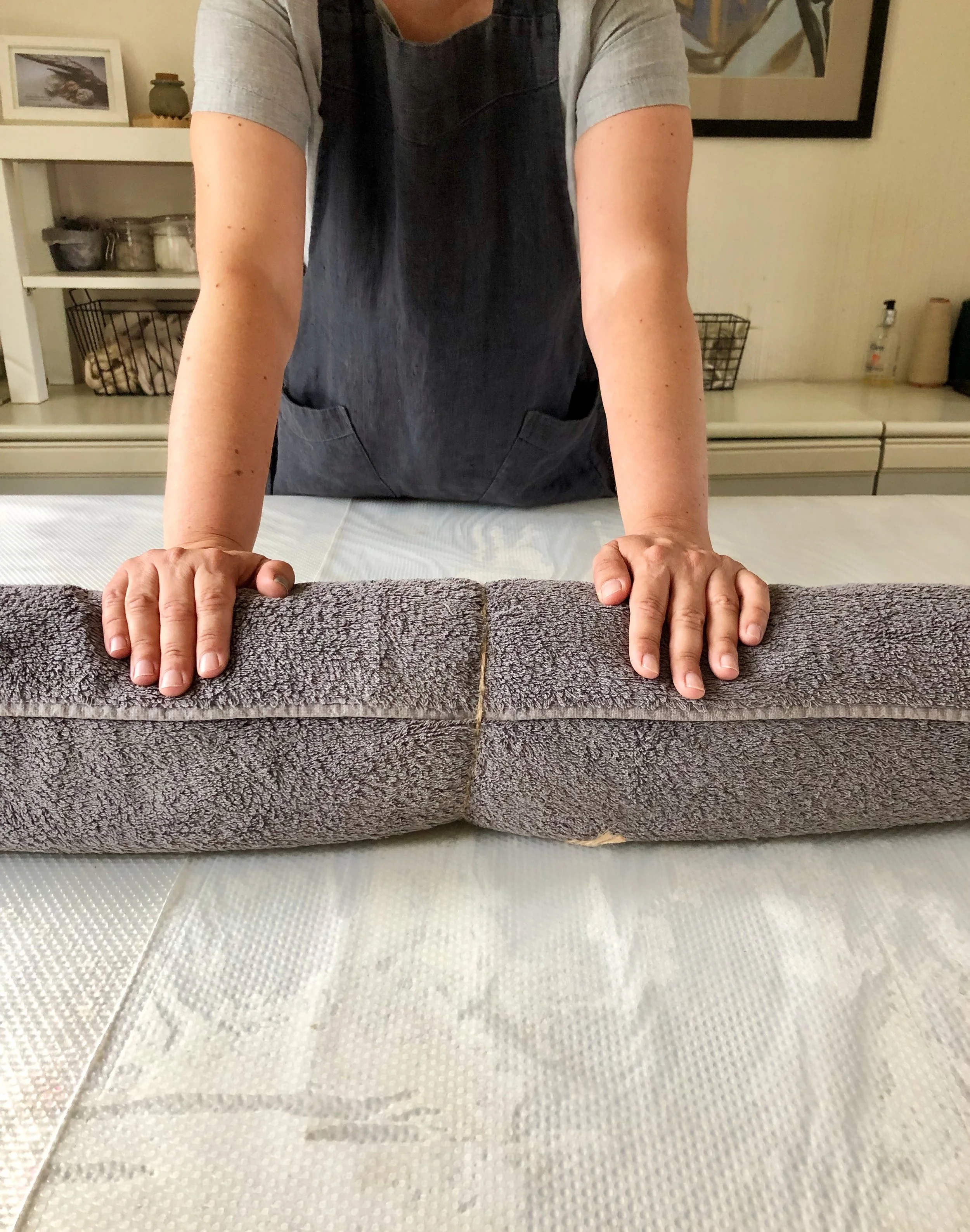
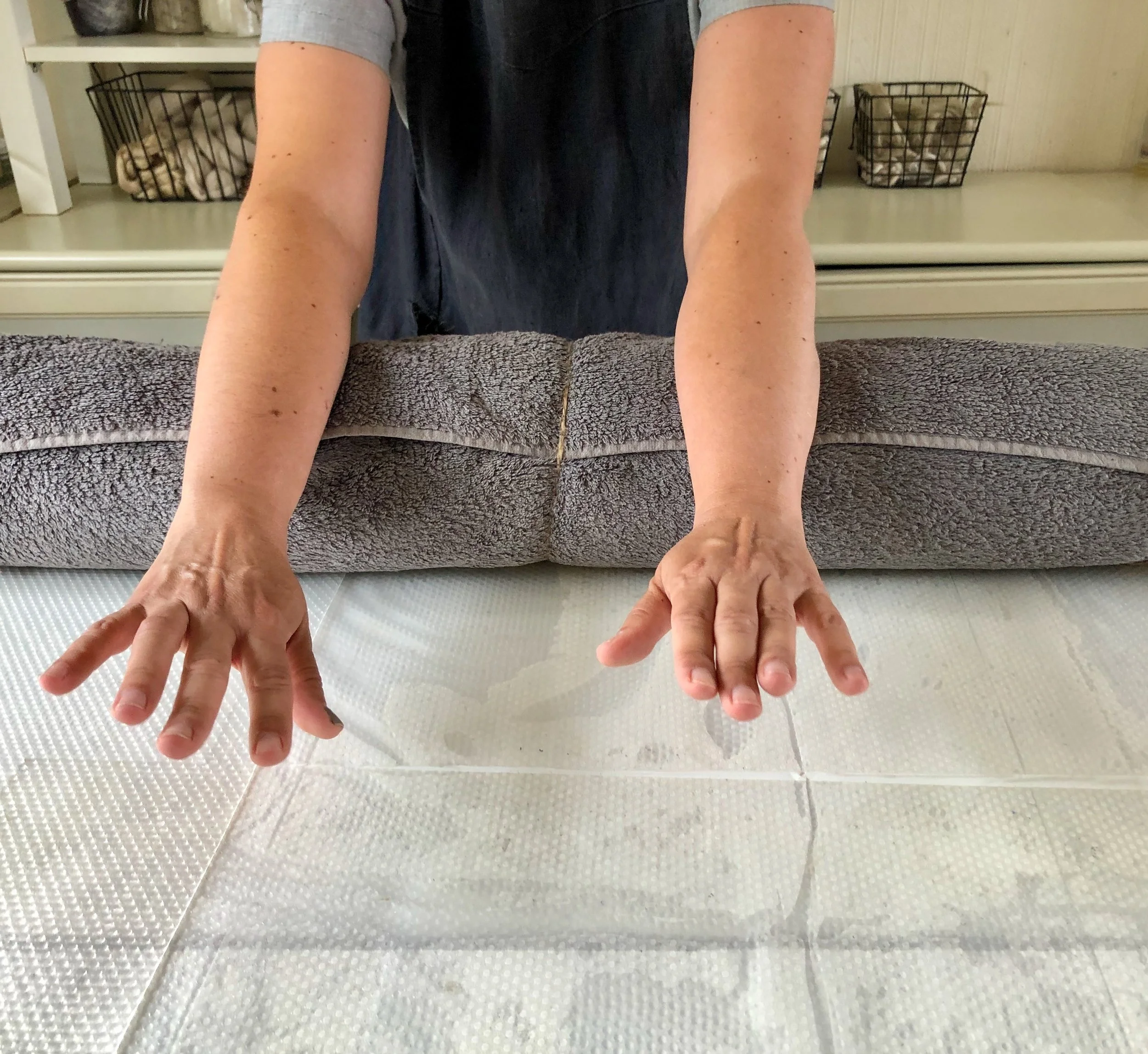
By repeatedly rubbing, touching and compressing the fibres, they bond or lock together into a single organic piece.
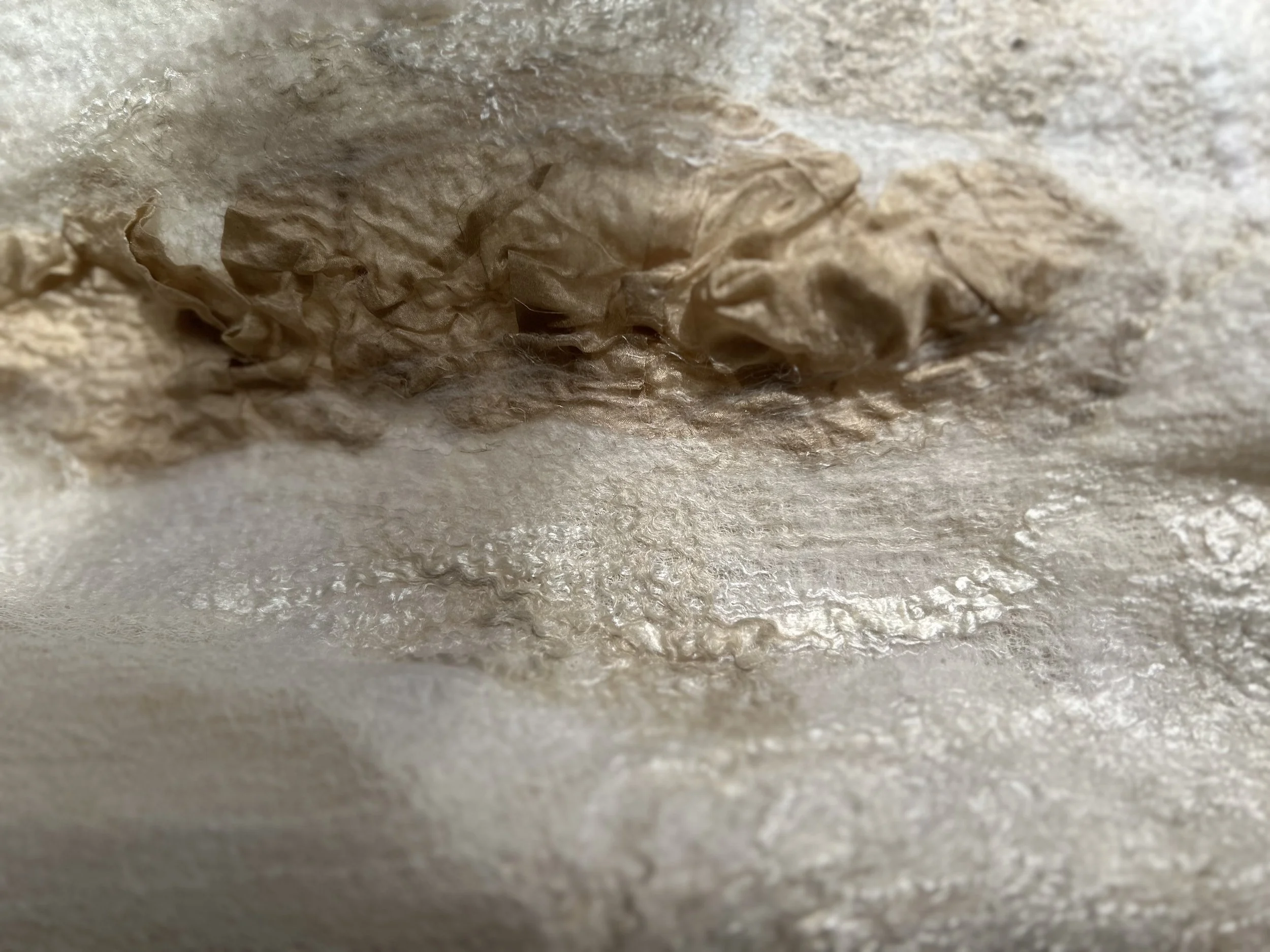
As the raw wool and silk fibres are laid out by rows, the work shrinks, changes and evolves, creating an unpredictable feel and magic in the finished project.
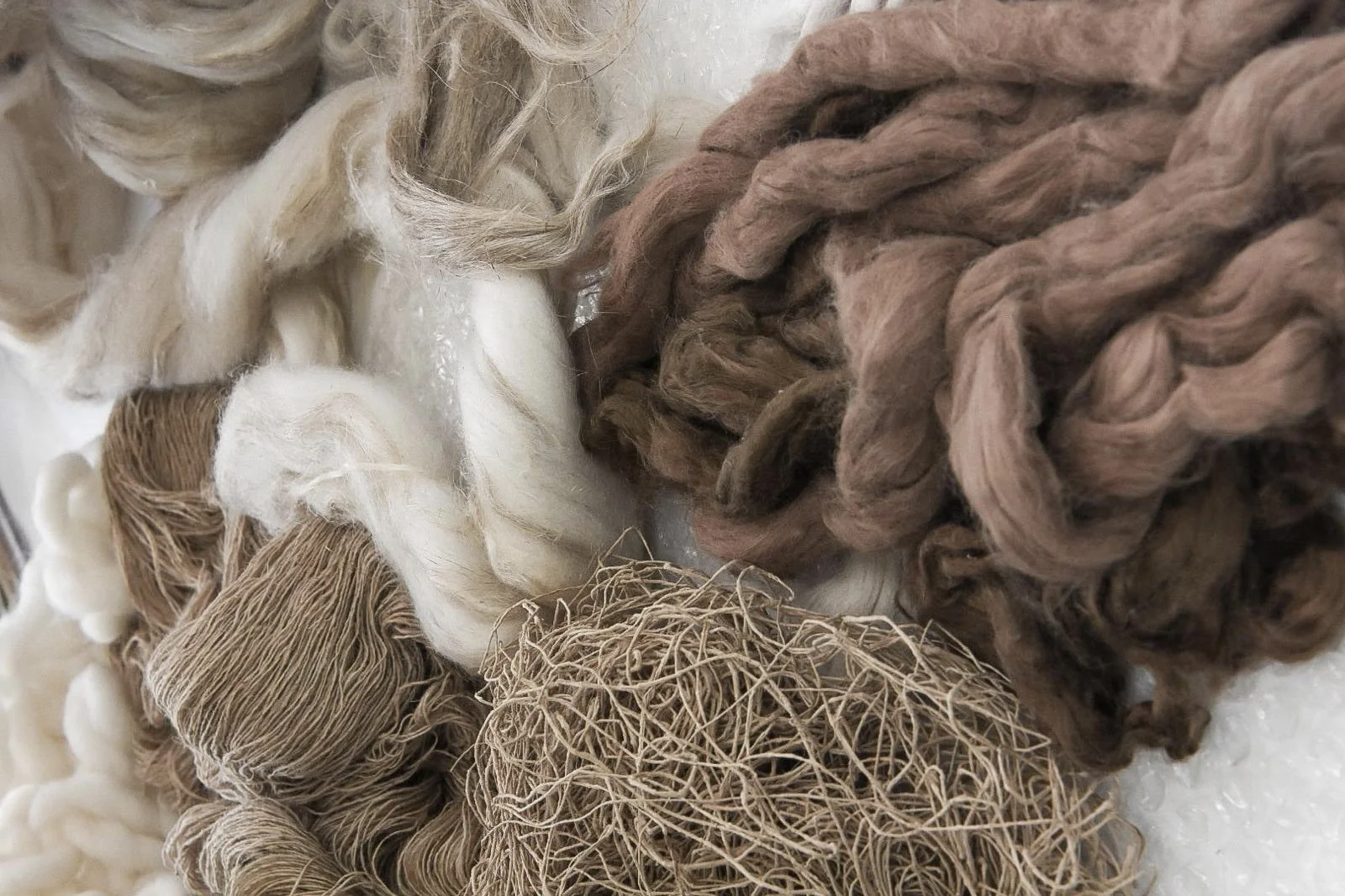
WHAT CAN YOU MAKE FROM WOOL FROM SCRATCH?
Though we often think wool is for cold weather, it can also be spring or summer fabric. People typically use thicker coarser wool to create a flat pieces of fabric to be used as modern textile wall hangings when applying various wet felting methods.
Combined with silk and fibre elements wool can be made into a lightweight scarf or a garment.
Other ideas may include some versatile seasonal accessories to layer and wear, mixed medium textile statement wool jewellery, home decor elements like felt pots and large vessels, decorative cosy pillows for your home upgrade or table runners.
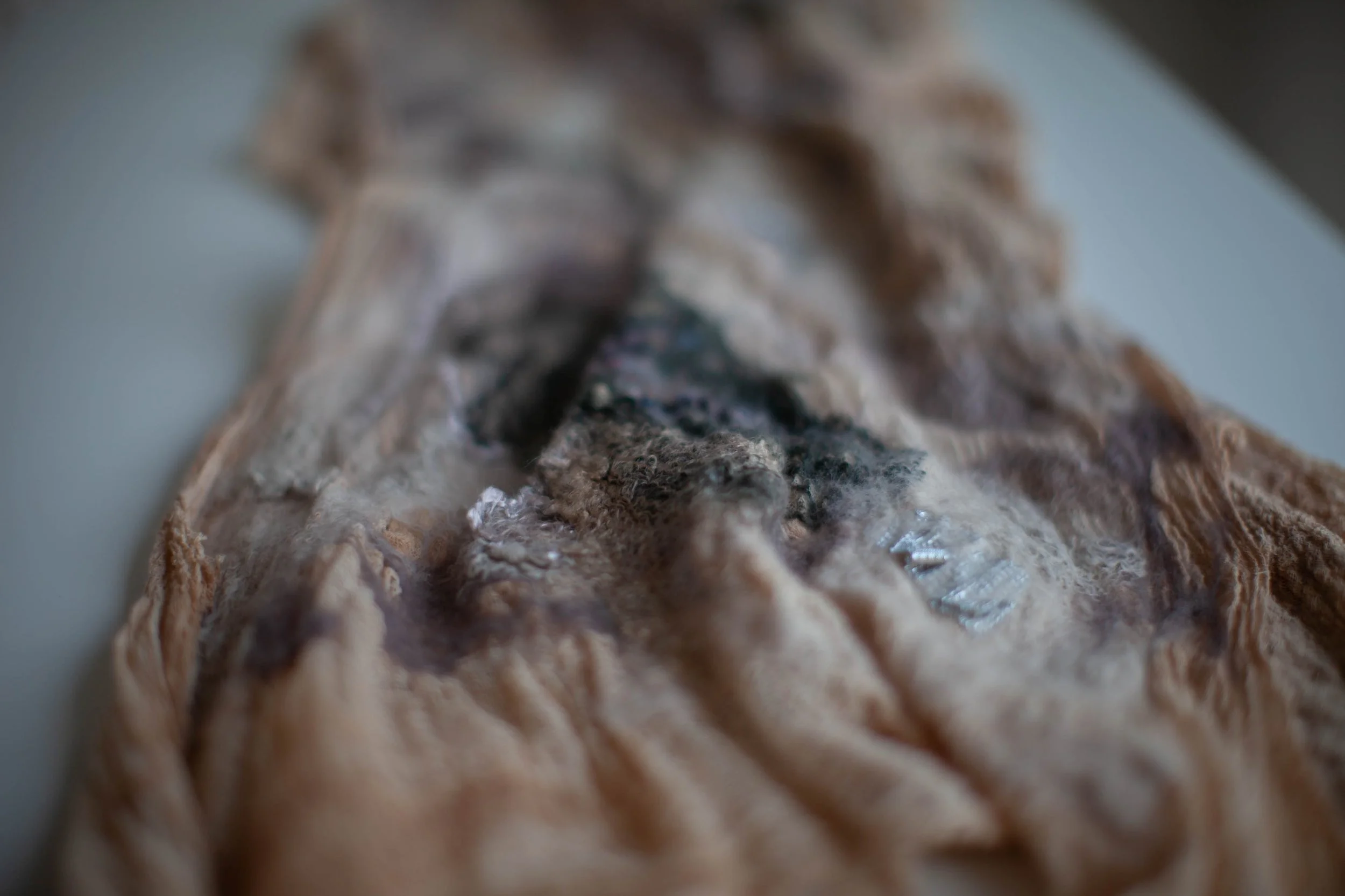
HOW ARE YOUR SCARVES MADE?
When various fabrics like silk are incorporated into a project, wool acts as “a glue” and you can create a nuno felt art scarf which makes a very unique textile piece. (“Nuno” is fabric or cloth in Japanese:)).
NUNO FELT METHOD bonds loose fibers, usually wool, silk or viscose into a sheer fabric such as silk or muslin gauze, creating a lightweight seasonal felt. The finished result looks like one single organic piece of art. That’s what I use to make my scarves as well as simply warm water and olive soap.
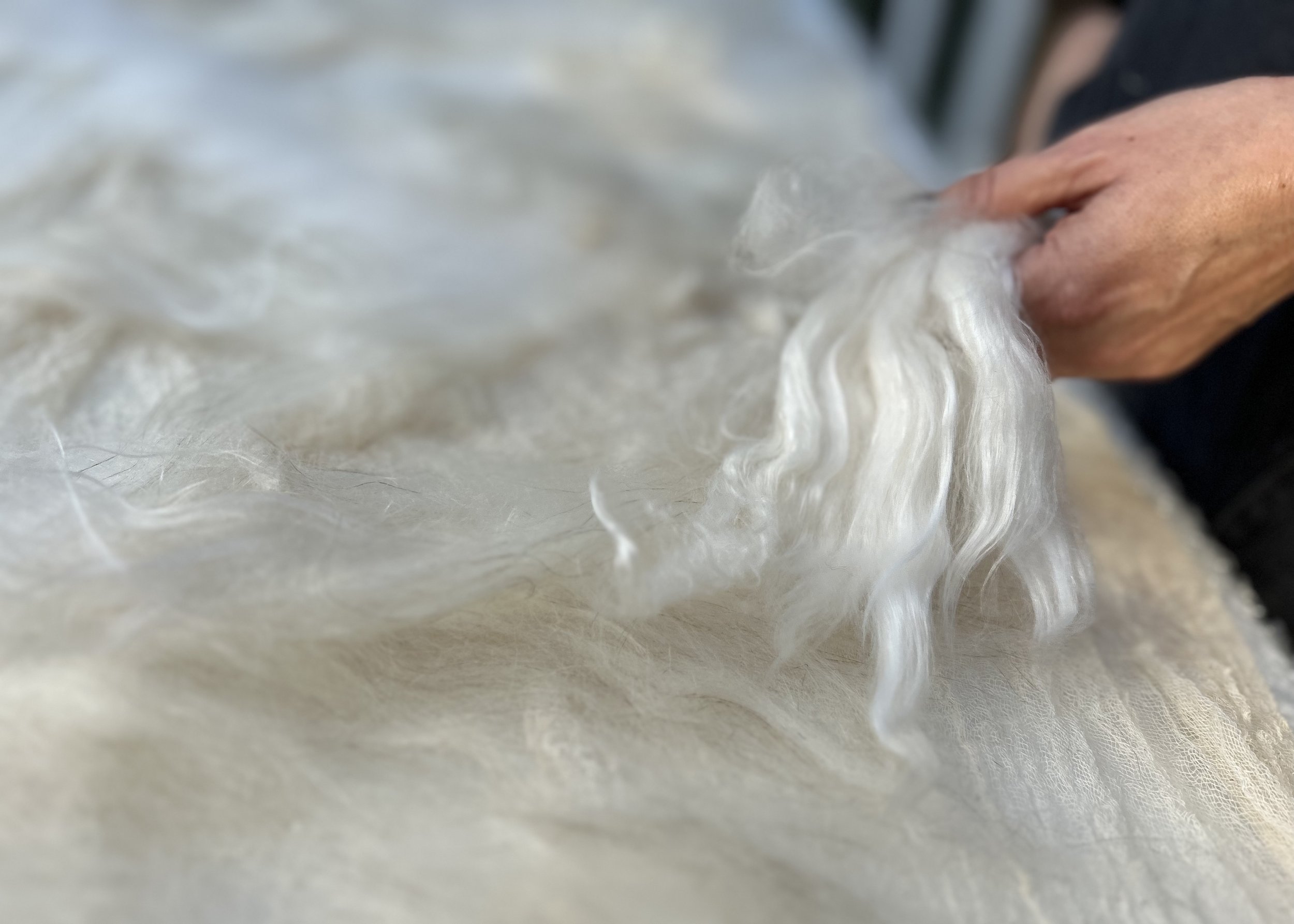
WHAT MATERIALS DO YOU USE?
I use the finest merino wool tops or roving as well as organic silk or linen fibres. I love fusing my hand-dyed lightweight fabrics like silk or cotton muslin with wool to create one-of-a-kind texture and surface. I have also been experimenting with plant fibres like mint, rose and pineapple to add sheen and luxurious feel.
Part of my creative process is hand dyeing the fabrics I use to make my products from scratch and totally naturally. This allows me to achieve multiple tones and shades and no two shawls or runners are alike.
To make my seasonal shades I create a natural dye bath and slowly simmer the foraged material I gather and find locally. The result are beautiful variety of shades that nature gives us so freely. You can see some of them in my gallery folder diary and in the most products I create.
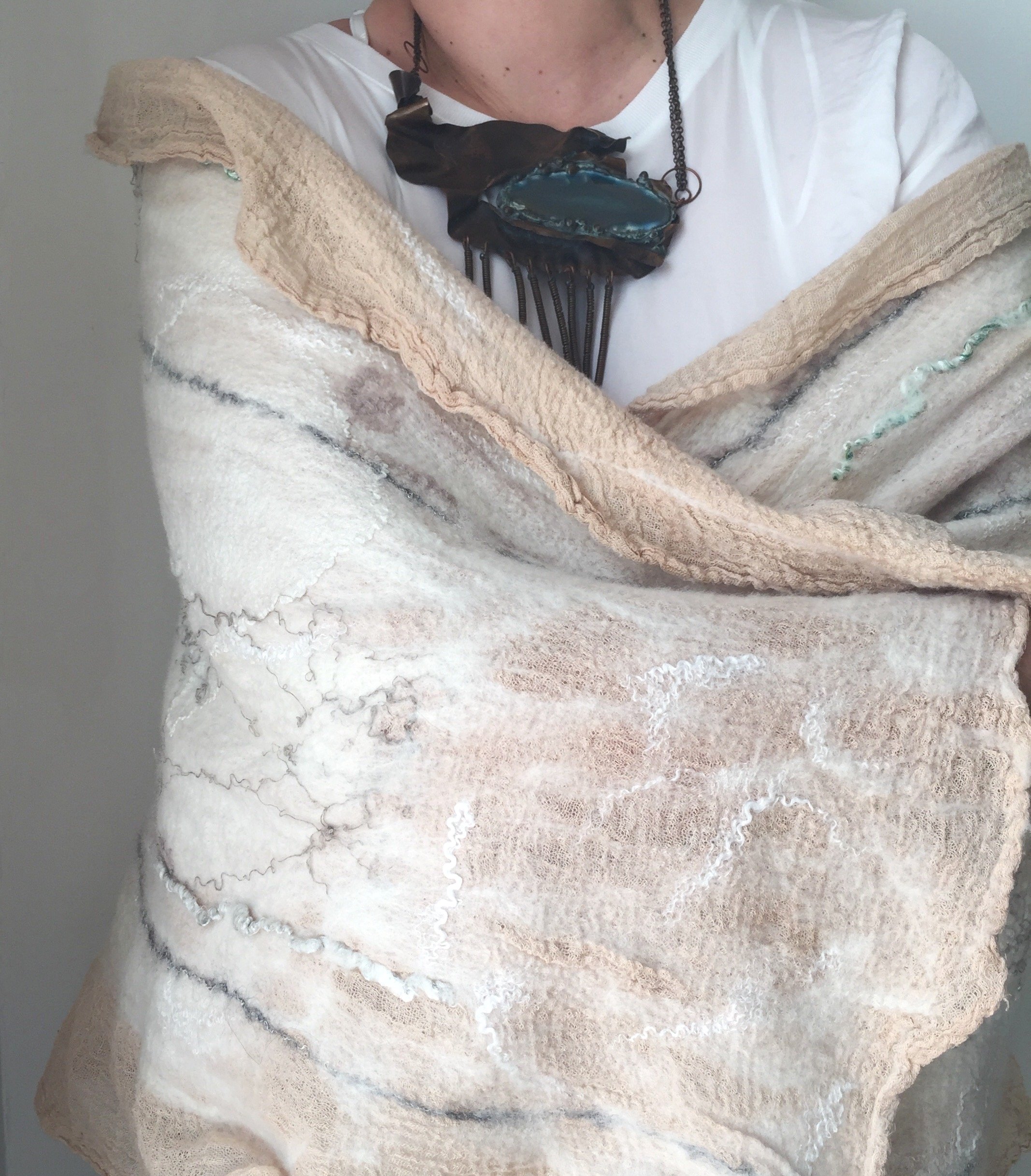
The nature of wool allows for this one-of-a-kind medium to cover multiple of purposes. Created for comfort and enjoyment of life these pieces are bound to draw the attention and please the owner.
Why not try this great craft for yourself?